

Overview
The Ollang Project Management Dashboard supports:- internal operational teams,
- external linguists,
- translation agencies,
- dubbing studios,
- and multi-layered localization workflows.
- Project Management users,
- and Editor / LSP users.
- control visibility,
- manage assignments,
- organize localization operations,
- and securely coordinate multilingual workflows.
The Two Main Operational Environments
Project Management Dashboard
Used for operational oversight, order creation, billing, analytics, workflow management, and project organization.
Editor / LSP Interface
Used for subtitle editing, dubbing review, translation operations, and assignment-based localization workflows.
Team Invitation Types
Organizations can invite multiple operational user types.Team Member
Internal operational users working inside the Project Management Dashboard.
Editor
Linguists or reviewers working inside the Editor Interface.
Translation Agency
External localization vendors managing multilingual operations.
Dubbing Studio
Professional dubbing vendors handling voice production workflows.
Project Management Users
Overview
Project Management users operate inside:- the Ollang Project Management Dashboard.
- Folders,
- Projects,
- Orders,
- assignments,
- billing,
- analytics,
- and workflow operations.
Project Management Roles
The platform supports operational permission structures including:- Owner
- Admin
- Project Manager
- Team Member
Permission Structure
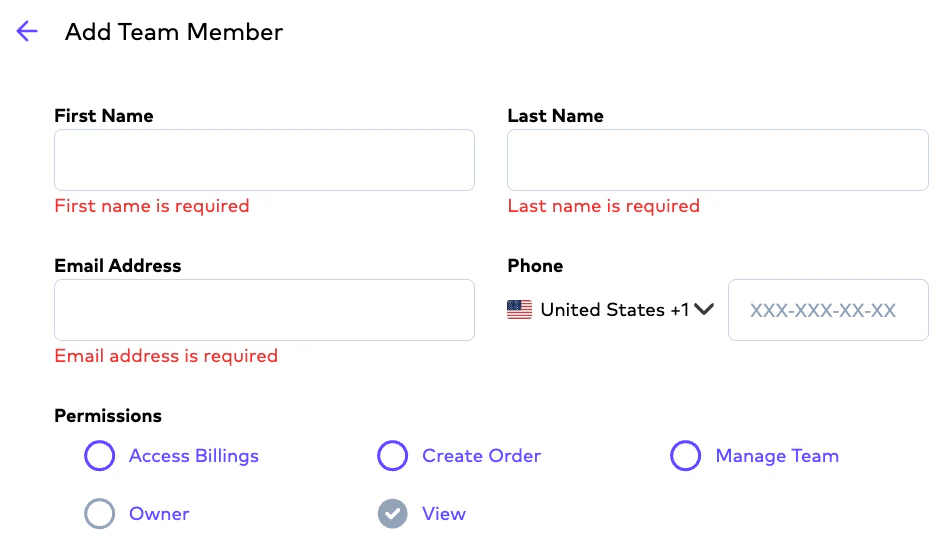
Core Permissions
Permissions may include:Create Orders
Allows users to create localization workflows and operational Orders.
Manage Team
Allows users to invite and manage operational users.
Access Billing
Allows users to view analytics, invoices, billing details, and payment-related operations.
View Access
Allows operational visibility into organizational workflows and Projects.
Access Billing Clarification
Users with Access Billing permissions may view:- invoices,
- analytics,
- payment information,
- and operational financial data.
- general credit visibility remains visible operationally across workflows.
Folder-Based Notification Logic
Notification behavior operates primarily at:- Folder level.
Visibility Rules for Project Management Users
Project Management users generally have visibility into:- all Folders,
- all Projects,
- and organizational workflows.
- notification ownership operates through Folder assignment structures.
Editor / LSP Users
Overview
Editors and linguists operate inside:- the Editor / LSP Interface.
- subtitle editing,
- transcription review,
- dubbing workflows,
- translation refinement,
- and operational delivery.
Important Visibility Rule
Editors do not see all Projects or organizational workflows.
- explicitly assigned Orders.
- Order level, not:
- Project level.
Example Assignment Visibility
LSP Hierarchy
The platform supports a multi-level localization hierarchy.LSP Admin
LSP Admins can:- manage localization operations,
- assign Orders,
- onboard linguists,
- and coordinate multilingual workflows.
- operational vendor managers.
LSP Project Manager
LSP Project Managers can:- coordinate operational assignments,
- manage delivery pipelines,
- and oversee linguist workflows.
- multilingual delivery operations,
- reviewer coordination,
- and operational execution.
LSP Linguist
LSP Linguists:- edit assigned Orders,
- refine localization output,
- and deliver finalized workflows.
- Orders assigned to them.
Translation Agencies and Dubbing Studios
Overview
Translation Agencies and Dubbing Studios may:- create internal users,
- assign operational tasks,
- and coordinate multilingual delivery pipelines.
- manage their own operational structures inside Ollang.
Studio Dubbing Vendor Workflows
Studio vendors may:- upload dubbing vocals,
- upload final mixed outputs,
- upload Mixmaster files,
- and coordinate operational dubbing delivery.
- delivery behavior depends on Order type.
Important Studio Dubbing Rule
Delivery workflows require:- either final mixed outputs,
- or operationally compatible audio assets.
Interface Switching
Project Management users may also:- switch into the Editor Interface.
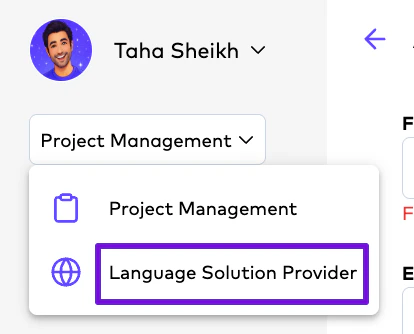
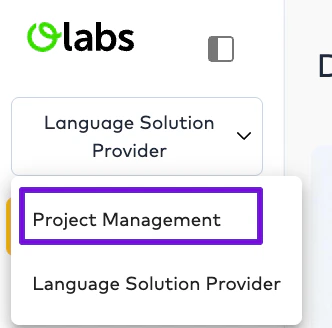
- operational review,
- subtitle editing,
- dubbing review,
- and assignment-level editing workflows.
Important Operational Clarification
A Project Management user switching into the Editor Interface only sees:- Orders assigned to them operationally inside the Editor environment.
- Order-level assignment logic.
Example Multi-Team Workflow
Important Operational Notes
Can organizations onboard their own linguists?
Can organizations onboard their own linguists?
Yes. Organizations may onboard internal reviewers, agencies, editors, and dubbing studios.
Do Editors see all Projects?
Do Editors see all Projects?
No. Editors only see explicitly assigned Orders.
Can translation agencies create internal users?
Can translation agencies create internal users?
Yes. Agencies may create and manage their own operational users.
Can dubbing studios upload deliverables directly?
Can dubbing studios upload deliverables directly?
Yes. Studio workflows support uploaded dubbing assets and final delivery coordination.
Can Project Management users switch to the Editor Interface?
Can Project Management users switch to the Editor Interface?
Yes. Project Management users may access the Editor Interface for operational review workflows.
Do assignments operate at Project level or Order level?
Do assignments operate at Project level or Order level?
Assignments primarily operate at Order level.